
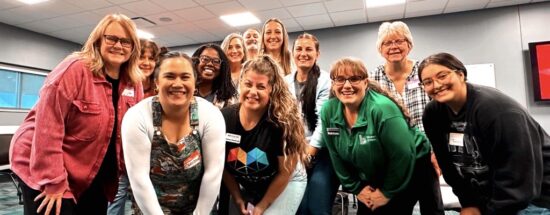
Stronger Together: How the Nebraska Rural Mentoring Collaborative Is Building Better Mentoring Across Rural Nebraska
Running a mentoring program in rural Nebraska comes with unique opportunities—and unique challenges. Smaller teams, limited resources, and geographic distance can sometimes make program leaders feel like they're tackling those challenges alone.
That's exactly why the Nebraska Rural Mentoring Collaborative was created.
Supported by MENTOR Nebraska, the Collaborative brings together mentoring organizations from across Nebraska to connect, share ideas, solve problems, and strengthen mentoring opportunities for young people across the region. Through monthly virtual meetings, ongoing communication, and occasional in-person gatherings, members have built more than a professional network—they've built a community.
"No mentoring program should have to do this work alone, which is why we created the Nebraska Rural Mentoring Collaborative," said Melissa Westbrook, Associate Director of Member Engagement & Learning at MENTOR Nebraska. "As a convener, connector, and capacity builder, MENTOR Nebraska brings rural mentoring leaders together to learn from one another, strengthen their programs, and create even greater opportunities for young people to thrive.”
We spoke with Jalin Gerdes of The Friends Program of Kearney and Angela Hipp of Community Connections in North Platte about what makes the Collaborative so valuable.
Why did the Collaborative begin?
As mentoring organizations across rural Nebraska connected through statewide networks, many realized their experiences were often different from those of larger metro-based programs.
"Many of these organizations were originally part of a larger statewide network that included a significant number of metro-area agencies. Over time, the rural agencies recognized the need for a collaborative focused specifically on the unique challenges, opportunities, and resource needs of smaller organizations serving rural communities," said Jalin Gerdes.
Angela Hipp agreed.
"As a smaller mentoring program, I realized I didn't have to solve every challenge on my own. Rural programs often have limited staff and resources, but we also have a wealth of knowledge spread across the state."
With support from MENTOR Nebraska, those conversations evolved into a dedicated network designed specifically for rural mentoring professionals.
What does the partnership look like?
The Collaborative meets monthly to exchange ideas, discuss challenges, and celebrate successes. But the relationships don't end when the meetings do.
"We email or call each other when we're facing a challenge, looking for ideas, wondering how another program handles a situation, or trying to identify funding opportunities," Angela said.
Members regularly share recruitment strategies, policies, grant opportunities, activity ideas, and even help promote one another's events and social media.
"It's really become a trusted network of peers who genuinely want one another to succeed."
What's made the Collaborative successful?
Both leaders point to the culture of trust and openness.
"Organizations feel seen, heard, and supported by peers who understand the unique realities of serving rural communities," Jalin said.
Angela believes one simple mindset has made all the difference.
"There wasn't competition—just a willingness to learn from one another and strengthen mentoring across the state."
That spirit of collaboration has helped ideas spread faster and encouraged members to reach out between meetings whenever they need support.
What impact has it had?
For both organizations, the Collaborative has expanded perspectives, strengthened programs, and reduced the sense of isolation that can come with serving rural communities.
"The partnership has strengthened our connections with neighboring agencies, expanded our professional network, and reinforced the knowledge that we are not navigating challenges alone," Jalin shared.
Angela says the impact extends beyond her own program.
“Through the Collaborative, I've gained ideas I never would have developed on my own, but I've also gained a much deeper understanding of the barriers other mentoring programs face. It's also helped me become a better community partner locally. I've learned how to explain mentoring more clearly, address common misconceptions about what mentoring is, and communicate the impact that quality mentoring can have. Those lessons have strengthened the partnerships we've built in our own community. One example is our partnership with an organization serving non-English-speaking families. Because of what I've learned through collaboration, we've been able to think more intentionally about inclusion and relationship-building. That partnership has opened mentoring opportunities for youth who may not otherwise have participated, created wonderful cross-cultural connections, and even allowed us to complete larger community service projects together.”
Advice for other organizations
When asked what advice they would give organizations interested in building partnerships, both emphasized curiosity, trust, and shared purpose.
"Look for partners who share your mission and values but may bring different experiences, perspectives, and strengths to the table. Strong partnerships are built on trust, open communication, and a willingness to learn from one another," Jalin said.
Angela added:
"Lead with curiosity. Ask questions. Be interested in how other organizations do their work. Some of the best ideas come from simply listening and learning."
And perhaps her most important takeaway:
"Don't be afraid to cheer for other organizations. Share their successes. Promote their work. Celebrate their wins. When we stop viewing one another as competitors and start viewing each other as partners in creating stronger communities, everyone benefits—especially the youth and families we serve."
Looking Ahead
The Nebraska Rural Mentoring Collaborative continues to grow as more organizations join the conversation, share resources, and work together to strengthen mentoring across rural Nebraska.
By creating a space where mentoring professionals can learn from one another and solve challenges together, the Collaborative is helping ensure that no rural program has to do this work alone—and that more young people across Nebraska have access to the life-changing power of mentoring.
Interested in Joining?
If your mentoring program serves a rural Nebraska community, we'd love to connect. Contact Melissa Westbrook at mwestbrook@mentornebraska.org.
